Shaolin Kung Fu Training
Shaolin Kung fu Training: the Unity of Zen and Martial Arts
Shaolin Kung fu is a traditional Chinese martial arts school originating from the legendary Shaolin Temple on Songshan Mountain in Henan Province. With “the unity of Zen and martial arts” as its core, it stands as the most comprehensive and far-reaching martial arts system in China, giving rise to the famous saying, “All Kung Fu under heaven originates from Shaolin.”
At our premier Shaolin Kung Fu academy, we offer an immersive environment where students can experience authentic Shaolin Kung Fu training. This is not merely a method of combat skill but a complete cultural system integrating Buddhist Zen mind cultivation, Confucian ethics, and traditional health preservation.
History of Shaolin Kung fu: Origins and Development (Over 1,500 Years)
Immersing yourself in the world-renowned shaolin kung fu culture means connecting with over fifteen centuries of unbroken martial lineage:
Founded in the Northern Wei Dynasty (495 AD): Emperor Xiaowen built the temple for the Indian monk Batuo. In the early days, monks began to practice to relieve fatigue, defend against wild beasts, and protect the temple, with representative foundational figures including Seng Chou and Hui Guang.
Famous in the Sui and Tang Dynasties (620 AD): Thirteen Monk Warriors Rescued the Tang Emperor, helping Li Shimin pacify Wang Shichong. They were specially permitted by the imperial court to form monk soldiers, making the temple famous for its legendary skills and spreading its reputation worldwide.
Prosperous in the Ming Dynasty (1368–1444): The system fully matured, and monk soldiers were conscripted by the imperial court to resist Japanese pirates and defend the border. A complete set of routines for fist, staff, spear, and sword was established, earning the title “Shaolin staff technique is the best under heaven.”
Secretly Passed Down in the Qing Dynasty (1644–1912): The imperial court banned martial practices, and the temple suffered suppression. Masters secretly passed down their knowledge to the folk, heavily influencing and evolving into many prominent branches such as Hung Kuen and Wing Chun.
Modern Revival (1949 to Present): The 1982 film “Shaolin Temple” became incredibly popular all over the world. In 2006, this profound system was officially included in the national intangible cultural heritage list.
Shaolin Kung fu Core Culture: The Unity of Zen and Kungfu
The true soul of our Shaolin Kung Fu Academy lies in cultivating the mind through Zen (Chan) and tempering the physical body through martial arts, seamlessly integrating intense physical practice with spiritual enlightenment.
Zen and Martial Arts as One: Practicing boxing is practicing Zen. Through deep concentration, breath regulation, and focusing the mind on a single point, practitioners achieve a state of perfect unity between movement and stillness, mind and hand.
Martial Ethics: We emphasize compassion and stopping violence through disciplined training. Students strictly abide by the “Eight Strikes and Eight Non-Strikes” (clearly defining allowed attacking areas and strictly forbidden vital zones) alongside rigorous moral precepts.
Faith Foundation: Integrating the Buddhist belief in Kimnara King (the Dharma protector), we regard daily practice as a sacred part of protecting spiritual wisdom and cultivating the true self.
Shaolin Kungfu Technical System: Comprehensive and Profound (Over 700 Routines)
To truly learn kung fu in Shaolin Temple traditions, students must progress through an authentic, multi-dimensional curriculum. This system is divided into four comprehensive technical categories:
Internal Qigong Methods (Foundation)
Shaolin Yijin Jing (Muscle-Tendon Changing Classic): The ultimate internal skill of Shaolin. It focuses directly on strengthening muscles and bones, dredging the body’s meridians, and generating explosive internal strength, which is highly beneficial to longevity.
Shaolin Xisui Jing (Marrow-Cleansing Classic): Focuses heavily on regulating internal vitality, cleansing the marrow, and deeply purifying both body and mind.
Shaolin Baduanjin & Luohan Shibashou: Essential health-preserving exercises that regulate qi and blood while safely stretching muscles and bones.
Shaolin Hard Qigong: Legendary techniques like the Iron Cloth Shirt and Golden Bell Shield. Through targeted breathing and body conditioning, practitioners enhance their ability to resist heavy impacts.
Shaolin Boxing (Core, Authentic External Martial Arts)
The Fighting Style: Characterized as valiant, rapid, simple, and concise. Practices emphasize that “fists strike in a straight line, and fists strike within the space of a lying ox,” teaching students to effectively subdue opponents in narrow or confined spaces.
Shaolin Luohan Quan (Arhat Fist): The vital foundation for beginners, imitating the powerful demeanor of Arhats while combining hardness with softness.
Shaolin Da Hong Quan & Xiao Hong Quan: Known as the “mother of Shaolin boxing,” these forms feature broad, vigorous, and magnificent movements.
Advanced Forms: Advanced shaolin kung fu techniques such as Pao Quan (Cannon Fist), Chang Quan (Long Fist), Mei Hua Quan (Plum Blossom Fist), and Xin Yi Ba (Heart-Intent Palm), each focusing on rapid, agile, and steady applications.
Shaolin Weapons (Famous Worldwide)
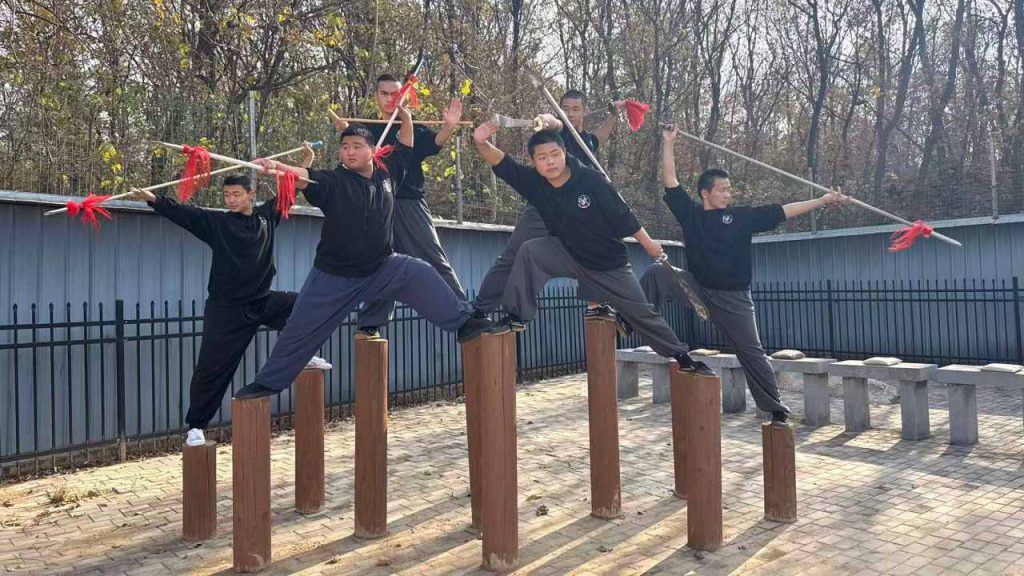
The Supreme Staff: Featuring the Single Coiled Dragon Staff, Yasha Staff, Eyebrow-Level Staff, and the Shaolin Shadow Hand Staff. It leverages the iconic power of “a staff strikes a large area.”
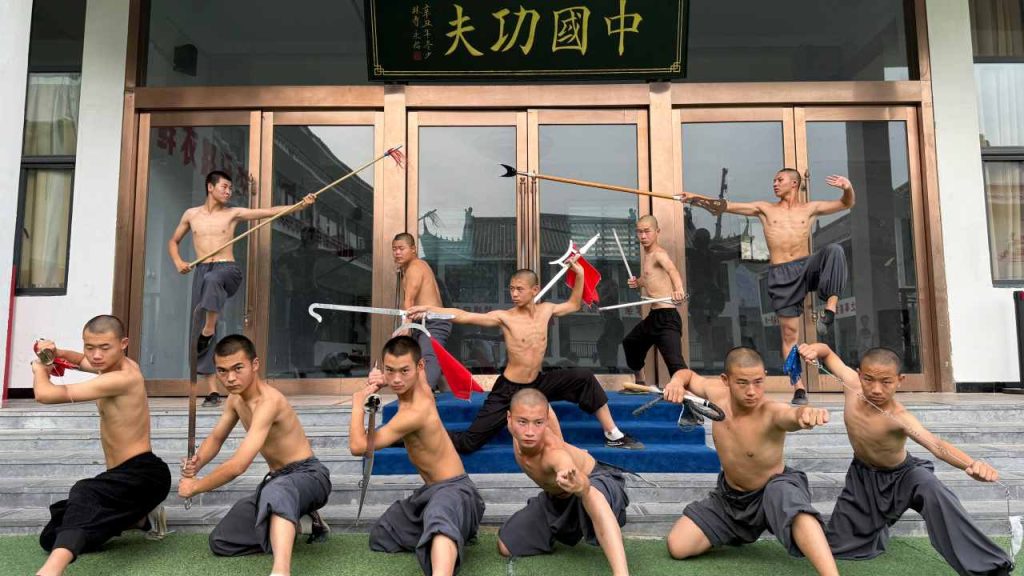
Swordsmanship & Mastery: Specialized forms including the Plum Blossom Sword, Single Sword, and Double Swords, utilizing rapid, fierce chopping and slashing motions.
Comprehensive Arsenal: Mastery over long, short, hard, and soft weapons including precise spear techniques, the Nine-Section Whip, and the Convenient Shovel.
Shaolin Seventy-Two Unique Skills and Practical Combat Techniques
The 72 Unique Skills: Secret conditioning practices such as finger and palm techniques (Golden Vajra Palm), advanced grappling, acupoint pressing, bone dislocating, and lightness skills.
Shaolin Practical Sanshou (Free Combat): Real-world application with no fixed moves, training practitioners to adapt to changes randomly through close-range short strikes, wrestling, and direct combat.
Shaolin Kungfu Style Characteristics and Training
When you choose to learn kung fu in shaolin temple styles, your daily curriculum is governed by distinct combat principles and a time-tested training progression:
General Style Principles
Valiant and Crisp: Physical force is exerted simply and directly, aiming at key targets with absolutely no redundant or fancy show moves.
Offense and Defense Integration: Every fast-paced routine contains hidden defense inside an offense, and offense inside a defense.
Steady Footwork: Deeply rooted in the foundational Four-Post Horse Stance, keeping the lower body as completely immovable as Mount Tai.
The Training Progression
Basic Skills: Intense stance training (Horse Stance, Bow Stance), flexible leg techniques, core/waist conditioning, and raw strength training conducted through the severe cold of winter and the extreme heat of summer.
Routines & Applications: Moving from solo practice (mastering the moves) to pair practice (offense and defense coordination) and eventually transitioning into actual free combat.
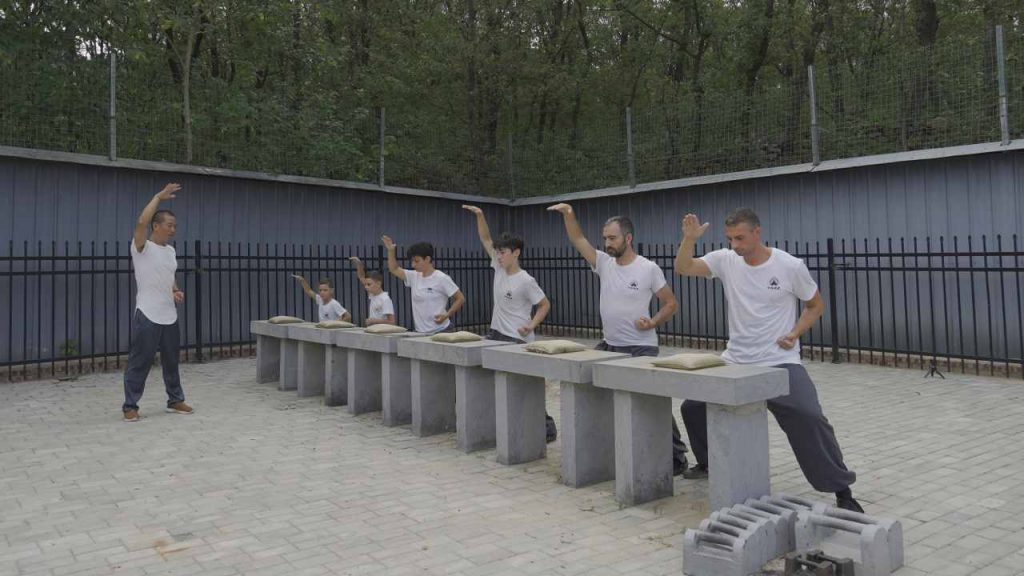
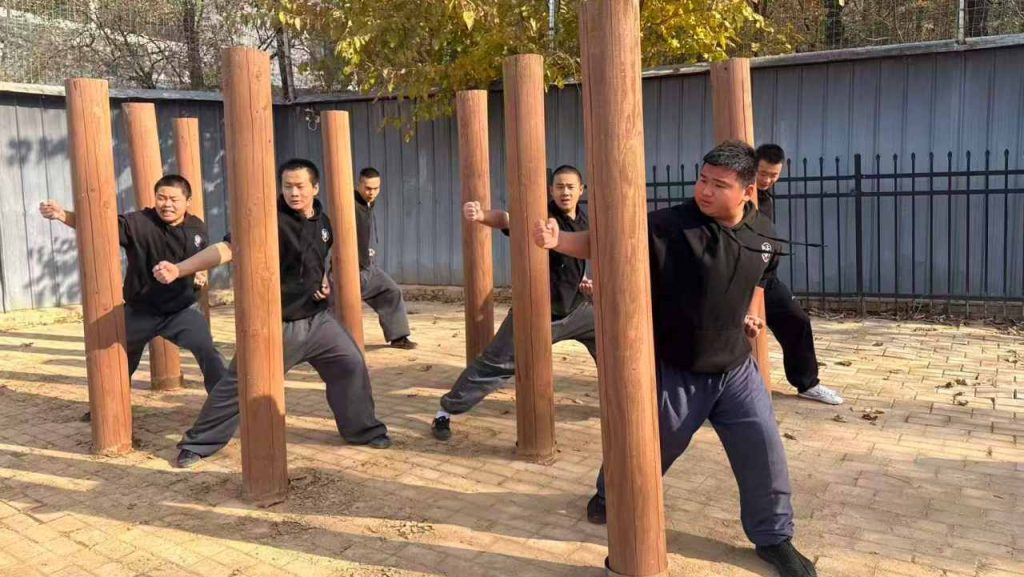
Specialized Conditioning: Deep conditioning utilizing the Wooden Man Post, sandbag hitting, Iron Sand Palm, and advanced hard skill practices.
Today, the impact of authentic shaolin kung fu training reaches far beyond the walls of the temple, establishing itself as a global phenomenon:
Mother of World Martial Arts: Most martial arts schools in the world (including Hung Kuen, Wing Chun, and various regional styles) are deeply influenced by or directly originate from these roots, validating the timeless saying, “All methods return to the origin.”
A Global Cultural Symbol: Standing as the universal symbol of Chinese martial arts excellence, the official Monk Martial Arts Troupe tours around the world, establishing hundreds of cultural centers overseas with more than 60 million learners globally.
Intangible Cultural Heritage Treasure: Since 2006, it has been officially safeguarded on the national intangible cultural heritage list. It serves as a cultural card for international communication, the preservation of holistic health, and self-mastery.